
The Golden Hour in Trauma Care: Why Every Second Counts
Feb 14, 2025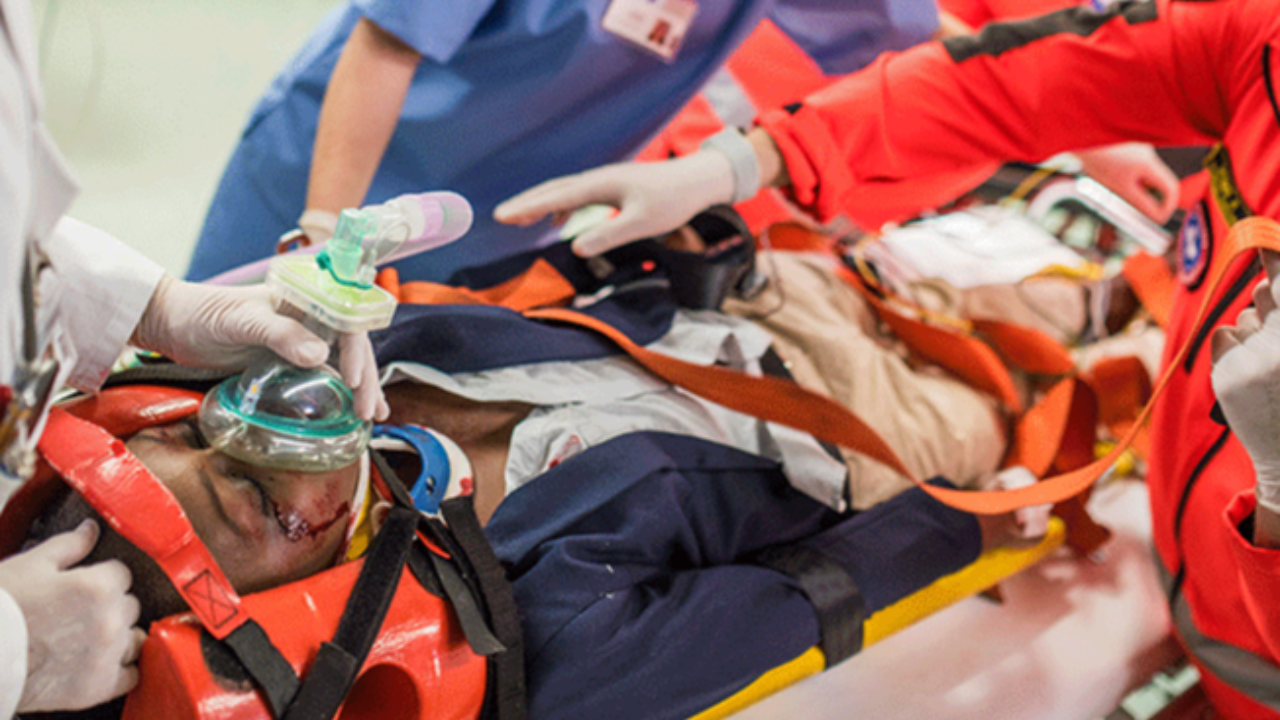
Introduction
In emergency medicine, time is often the defining factor between life and death. Among the critical concepts in trauma care, "The Golden Hour" is one of the most well-known and widely emphasised. Coined by Dr. R. Adams Cowley, a pioneer in trauma surgery, the Golden Hour underscores the importance of rapid intervention in critically injured patients to optimise outcomes and reduce mortality.
What Is the Golden Hour?
The Golden Hour refers to the first 60 minutes following a traumatic injury, during which prompt medical intervention can significantly impact survival and recovery. While not a strict cutoff, the principle highlights the urgency of delivering definitive care quickly. Delays in assessment, resuscitation, or treatment can lead to deterioration, worsening shock, multi-organ failure, and death.
The Physiology Behind the Golden Hour
Trauma patients often suffer from massive haemorrhage, which can rapidly lead to hypovolaemic shock. Without timely intervention, the deadly cascade of hypoxia, acidosis, and coagulopathy — known as the lethal triad — sets in, making resuscitation increasingly difficult. Early control of bleeding, restoration of perfusion, and prevention of secondary injury are crucial during this critical period.
The Role of Prehospital Care
Emergency medical services (EMS) play a vital role in protecting the Golden Hour. Key interventions include:
- Rapid scene assessment and extrication – avoiding unnecessary delays in transport.
- Airway management – ensuring adequate oxygenation and ventilation.
- Bleeding control – using tourniquets, haemostatic dressings, and early resuscitation.
- Timely transport to a trauma centre – ideally to a facility with full trauma capability.
The Hospital Response: Trauma Team Activation
Once the patient reaches the hospital, a coordinated trauma team response is essential. This includes:
- Primary Survey (ABCDE) – identifying and treating life-threatening injuries immediately.
- Haemorrhage control – surgical or interventional radiology support as required.
- Damage control resuscitation – favouring early blood products over excessive crystalloids.
- Definitive care – such as surgery, ICU stabilisation, or specialist intervention.
Advances in Trauma Care and the Golden Hour
Modern trauma care has significantly improved our ability to intervene effectively during the Golden Hour. These advancements include:
- Prehospital blood transfusion – early correction of haemorrhagic shock.
- Point-of-care ultrasound (eFAST) – rapid detection of internal bleeding.
- REBOA – minimally invasive control of non-compressible torso haemorrhage.
- Regional trauma networks – improving time to definitive care.
Challenges and Future Directions
While the Golden Hour remains fundamental, modern trauma care increasingly emphasises delivering the right interventions at the right time rather than adhering strictly to a 60-minute window. Research continues to refine prehospital triage, optimise transport decisions, and improve trauma system design worldwide.
Conclusion
The Golden Hour in trauma care is a foundational concept underscoring the urgency of early intervention in critically injured patients. Although trauma systems and technologies continue to evolve, the core principle remains unchanged: every second counts. Ongoing advances in prehospital care, hospital response, and trauma research will continue to refine and enhance how we manage trauma patients.
References
- Cowley RA. “A total emergency medical system for the State of Maryland.” Maryland State Medical Journal, 1975.
- Holcomb JB et al. “Causes of death in U.S. Special Operations Forces...” Annals of Surgery, 2007.
- Cannon JW. “Hemorrhagic Shock.” NEJM, 2018;378:370-379.
Author